
Dokamerodoh-kah-MEH-roh · ドカメロ · also dokameroi (ドカメロい)
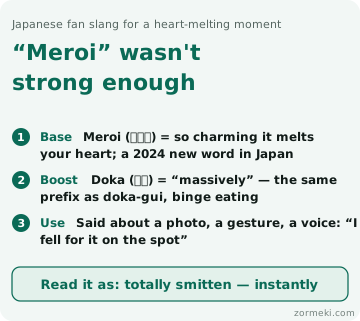
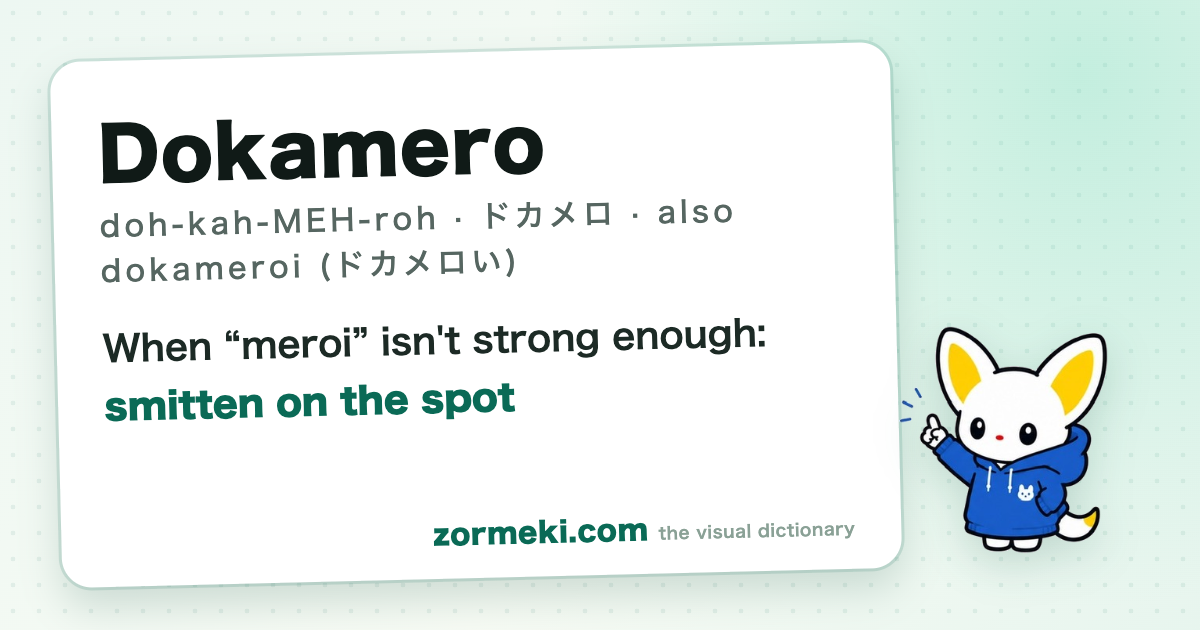
Dokamero (ドカメロ) is Japanese fan slang for being completely smitten by someone's charm on the spot — an intensified form of the 2024 buzzword meroi (メロい, “heart-melting”).
Last updated 2026-10-16
Use this diagram in videos & articles (free)
Free to use in videos, articles and streams. Use in ads or products requires a paid license (contact form at the bottom of the page).
Embed code (copy and paste as is):
Save the image file (SVG) — When you use it, please add a link to this page

Quick facts
| Reading | doh-kah-MEH-roh (ドカメロ). As an adjective it also appears as dokameroi (ドカメロい), and in the past tense as dokamerokatta |
|---|---|
| Built from | doka (ドカ, “massively, in a huge amount”) + mero, clipped from meroi (メロい, “so charming it melts your heart”) |
| Who says it | Fans of idols, anime and streamers on X, Instagram and TikTok; also in everyday talk about a crush |
| Said about | A photo, a hairstyle, a gesture, a voice, a single line of dialogue |
| Not | A person's name, a character, or a fixed “level” of charm |
What it means
Dokamero says that something didn't just charm you — it knocked you flat. The base word meroi describes the heart-melting feeling of being bowled over by someone's appeal; dokamero bolts the intensifier doka onto it. In actual use it also carries a nuance of speed: “I fell for it on the spot.” A voice that is “too low,” a sudden gentle tone, one line in a game — any of these can be dokamero.
It is a reaction word, not a label for a type of person. Japanese entertainment sites quote it as fan reaction to newly released anime character visuals (ABEMA TIMES) and to a creator's new hair color (Mezamashi media). Nothing about it is tied to one idol or one fandom.
The reason English readers run into the word is usually X's auto-translate, which cannot handle it. Scripting Japan, a blog that tracks Japanese slang month by month, collected renderings as different as “klutz,” “camera hog,” “camera shy,” “bespectacled” and “otaku love-max” — all from posts using the same word. None of them is right. If a post about a photo or a voice says dokamero, read it as “totally smitten.”
How the word is built
Use this diagram in videos & articles (free)
Free to use in videos, articles and streams. Use in ads or products requires a paid license (contact form at the bottom of the page).
Embed code (copy and paste as is):
Save the image file (SVG) — When you use it, please add a link to this page
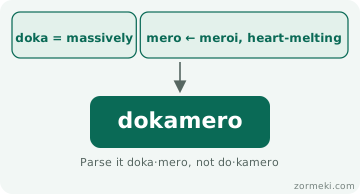
Parse it as doka·mero, not do·kamero. Doka (ドカ) is a Japanese intensifier meaning “massively” or “all at once,” familiar from doka-gui (ドカ食い, binge eating) and doka-yuki (ドカ雪, a heavy snowfall). Mero is clipped from the adjective meroi (メロい), which itself comes from meromero (メロメロ), the mimetic word for being hopelessly infatuated. Sanseido's dictionary editors put meroi in their “New Words of the Year 2024” top ten, defining it as being captivated by overwhelming charm.
Because the stem is an adjective, the compound inflects like one: dokameroi (“is dokamero”) and dokamerokatta (“was dokamero”). The bare form dokamero is the most common, dropped at the end of a post like an exclamation.
Meroi vs. dokamero
Use this diagram in videos & articles (free)
Free to use in videos, articles and streams. Use in ads or products requires a paid license (contact form at the bottom of the page).
Embed code (copy and paste as is):
Save the image file (SVG) — When you use it, please add a link to this page
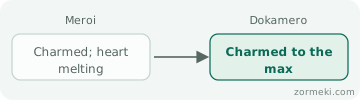
Dokamero does not name a different emotion; it is meroi with the volume turned up. Meroi itself is young — a 2024 new word — and by 2026 fans were already reaching for a stronger form. Choosing dokamero over meroi signals that the reaction was immediate and total, not a mild “that's cute.”
Is there an English equivalent?
No single word. The nearest everyday English is “down bad,” “totally smitten” or “swooning.” For a one-line gloss, use “massively heart-melting; fell for it instantly.” Do not trust “camera-shy,” “klutz” or the other outputs auto-translate produces for this word — they are errors, not alternative meanings.
Timeline
Use this diagram in videos & articles (free)
Free to use in videos, articles and streams. Use in ads or products requires a paid license (contact form at the bottom of the page).
Embed code (copy and paste as is):
Save the image file (SVG) — When you use it, please add a link to this page
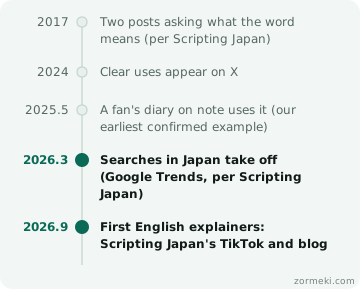
No single origin post has been found. Scripting Japan, searching X and Google, found only two posts from 2017 — both by one person asking what the word meant — and then nothing until clear uses appear in 2024. Our own earliest confirmed example is a diary entry on the blogging platform note dated May 14, 2025, which lists dokamero among words the writer wants to push. The most-liked single use Scripting Japan could find is a 2026 video of M!LK member Shunta Sono with roughly 32,000 likes: big, but not the kind of one-post viral spark that usually launches a word. The spread looks gradual and fandom-driven, and the first English-language explanations appeared only at the end of September 2026.
How it's used
The examples below were written by our editors to show usage. They are not quotations of real posts.
If you want to answer in English, “I'm done for” or “I'm down bad” gets the tone. Among fans who share the vocabulary, the bare word is enough.
Common misunderstandings
Use this diagram in videos & articles (free)
Free to use in videos, articles and streams. Use in ads or products requires a paid license (contact form at the bottom of the page).
Embed code (copy and paste as is):
Save the image file (SVG) — When you use it, please add a link to this page
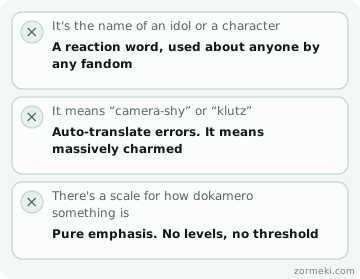
Where this is heading
This section is our editorial analysis. Sourced facts are kept in the sections above.
The pattern to watch is intensifier inflation. Meroi was a new word of 2024; within two years fans needed doka-meroi. Japanese already has doka-gui and doka-yuki, so the prefix is ready to attach to the next fan adjective as soon as overuse wears it down — expect more doka- coinages in idol and anime fandoms.
For English-speaking fans the practical consequence is that machine translation will keep failing on stacked slang like this, because the compound is too new and too fandom-specific for the models to have seen it in context. A word that an entire Japanese timeline is using can still render as “klutz.” The workaround is the one fans already use: learn the pieces — doka, mero — and the stacked forms read themselves.
Featuring this word in a video or article?
The diagrams on this page are free to use in videos, articles and streams.
“Dokamero” meaning, explained with diagrams https://zormeki.com/en/words/dokamero/
Save or embed a diagram (tap one for options):
Sources
- Sanseido, “New Words of the Year 2024” top ten — the meaning of meroi and its derivation from meromero (Japanese).
- fall, diary on note, “2025/5/13 これがノリ。全てを見極めてください” (published May 14, 2025) — our earliest confirmed public use of dokamero (Japanese).
- ABEMA TIMES (July 6, 2026) — fan reactions to new Jujutsu Kaisen character visuals, quoting dokamero (Japanese).
- Mezamashi media — reactions to Naenano's hair-color change, quoting dokamero (Japanese).
- Scripting Japan, “Japanese Slang Review – September 2026” (Wesley C. Robertson, Sept 30, 2026) — the doka + mero breakdown, the 2017 and 2024 search findings, the Google Trends rise after March 2026, the M!LK video, and the auto-translate renderings (English).
- Scripting Japan on TikTok, “ドカメロ #learnjapanese” (Sept 28, 2026) — the earliest English-language explanation of the word we have found.
- Sanseido: New Words of the Year 2024, top ten (Japanese)
- fall: diary entry of May 14, 2025 on note (Japanese)
- ABEMA TIMES: fan reactions to Jujutsu Kaisen visuals (Japanese)
- Mezamashi media: reactions to Naenano's hair color (Japanese)
- Scripting Japan: Japanese Slang Review – September 2026
- Scripting Japan on TikTok: ドカメロ #learnjapanese
Last verified: 2026-10-16